Laser technology · Tattoo removal
Picosecond or nanosecond laser for tattoo removal — differences and how to choose
Picosecond or nanosecond is not a marketing debate — it is about how energy reaches the pigment. We explain how the two technologies differ in day-to-day clinic practice and what the choice of device depends on.
By Gangsta Lasers4 min read
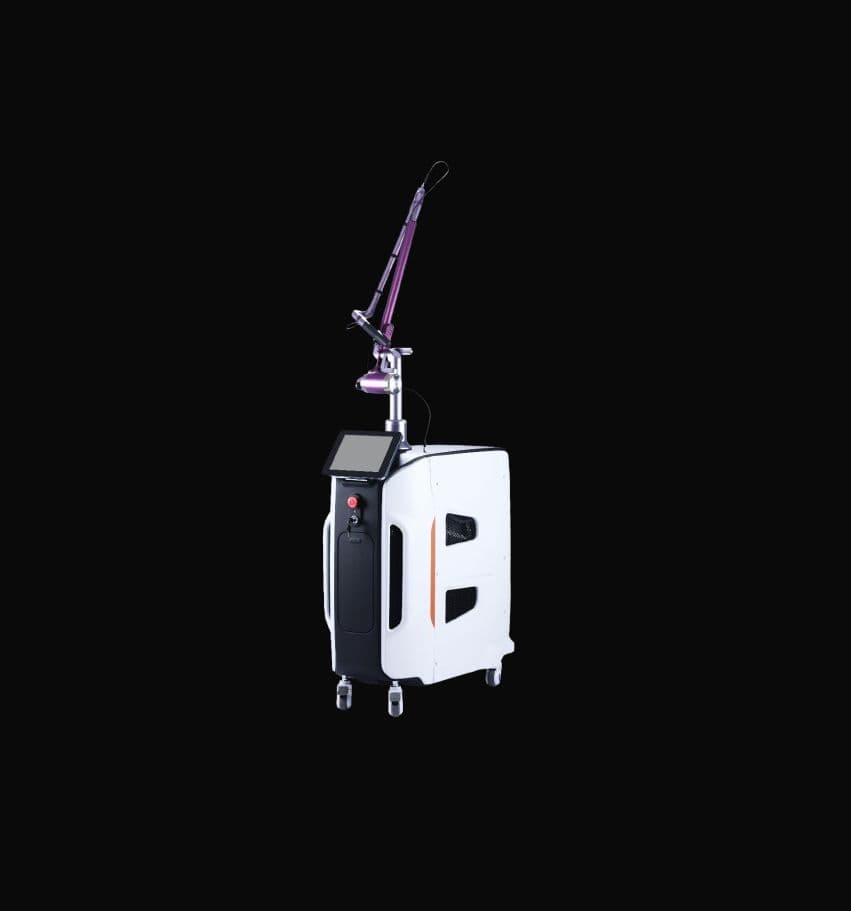
When a clinic starts looking for a tattoo removal laser, it very quickly runs into two words: picosecond and nanosecond. Both types of device break up pigment, both are used in professional clinics and both have their place. What sets them apart is pulse duration — and that one quantity changes how the energy acts on the ink particle and on the tissue around it. Below we explain the difference without the simplifications that often turn up in advertising material.
Pulse duration — what it actually means
A nanosecond is one billionth of a second. A picosecond is a thousand times shorter. A pigment removal laser does not emit light continuously; it delivers energy in very short pulses. The shorter the pulse, the more the same amount of energy is “compressed” in time, and so the higher the peak power that hits the ink particle.
The principle behind pigment removal is selective action: a beam of the right wavelength is absorbed mainly by the pigment rather than by the surrounding skin. If the pulse is short enough, the energy has time to shatter the particle before the heat spreads to neighbouring tissue. The shattered micro-fragments of ink are then gradually cleared by the lymphatic system — which is why the result is not immediate and why treatments are done as a series.
Nanosecond (Q-Switch) laser: a proven technology
Q-switched nanosecond Nd:YAG lasers (Nd:YAG Q-Switch) have been used in clinics for many years. They most often work at 1064 nm, used for dark colours, and 532 nm, used for shades of red. With a pulse measured in nanoseconds the photothermal effect dominates — the pigment heats up and breaks apart — with a smaller mechanical component. Some of the heat is also transferred to the tissue surrounding the pigment.
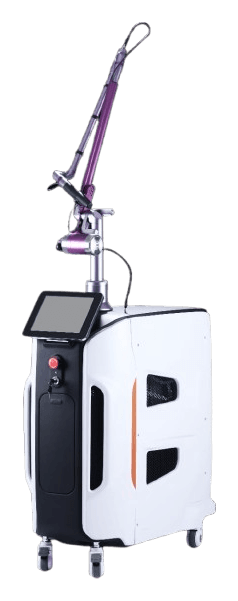
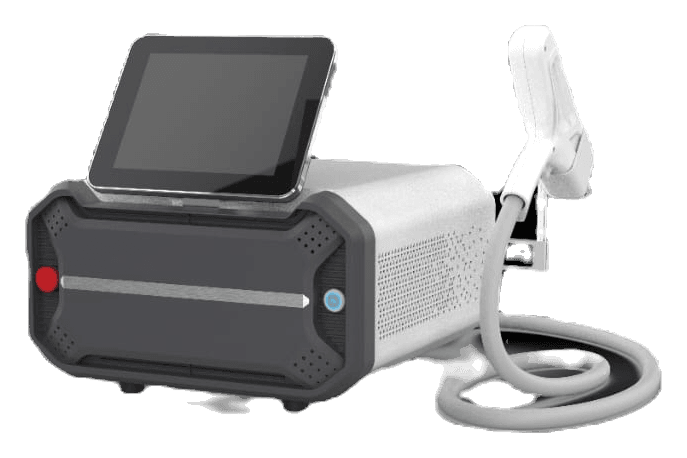
In practice a nanosecond laser works well for permanent make-up and dark tattoos, and in many clinics it is also the device used for pigmentation removal and carbon peels. It is usually cheaper to buy than a picosecond laser, which matters if the service is only just launching. The design of the device matters a great deal too: a laser with a dual Nd:YAG crystal, such as Gangsta Double Rods, is built specifically to limit energy losses when working across different wavelengths.
Picosecond laser: what a shorter pulse changes
With a picosecond pulse, the photoacoustic effect — also called photomechanical — dominates: the pigment particle is shattered by a pressure wave, while the thermal component is small and largely confined to the particle itself. The energy is more concentrated on the chromophore, which makes it possible to work at lower fluence values. For a clinic this means, above all, a lower thermal load on the tissue around the pigment.
Picosecond lasers are often the choice where a clinic works with coloured tattoos, with pigment that responded poorly to earlier treatments, or when it wants to expand into pigmentation and skin renewal treatments. It is worth being honest about this, though: a shorter pulse does not guarantee a particular number of sessions or a particular result. The outcome depends on the colour, depth and amount of pigment, the condition of the skin, previous removal attempts and the skill of the person performing the treatment.
Differences you notice in day-to-day work
- Type of pigment — nanosecond lasers handle dark inks well; for coloured and stubborn pigments, practitioners more often turn to picosecond technology with several wavelengths.
- Thermal load on the skin — a shorter pulse means a smaller thermal effect, which matters in delicate areas and on skin prone to pigmentation.
- Length of the series — depends on many factors at once and cannot honestly be promised before a consultation, whatever the technology.
- Purchase price and barrier to entry — nanosecond devices are usually cheaper, while picosecond devices require a bigger investment.
- Range of additional treatments — depending on the model: pigmentation removal, carbon peels and, in picosecond lasers, skin renewal modes with fractional lenses.
Wavelength matters as much as pulse duration
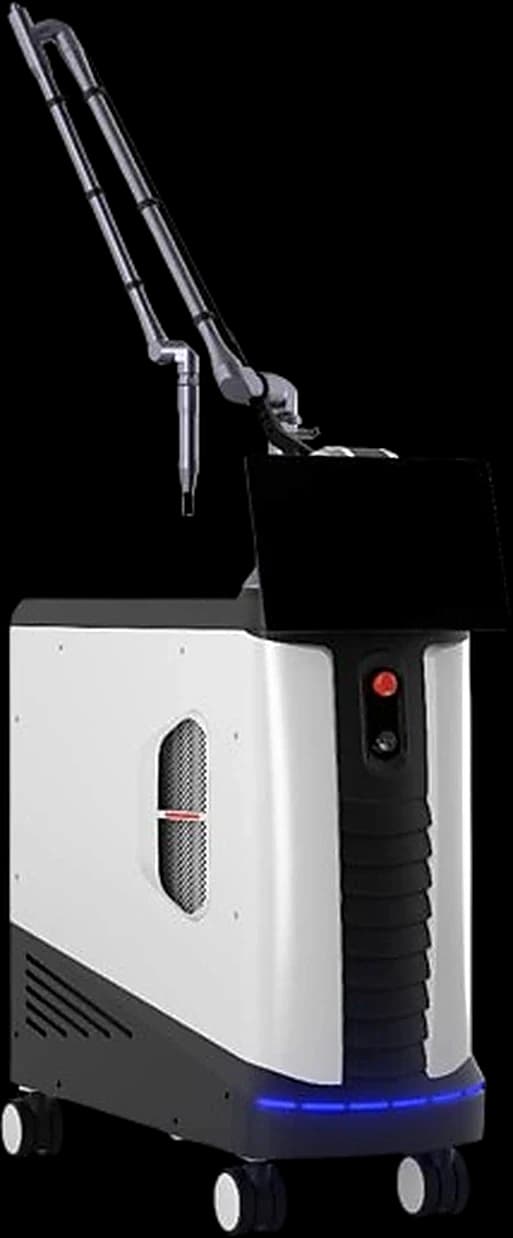
Each ink colour absorbs a different wavelength. 1064 nm is used for dark colours and 532 nm for shades of red. Other colours need other wavelengths, so a device with one or two wavelengths will not effectively remove every tattoo, whether its pulse is nano- or picosecond. Gangsta Pico 2Rods, for example, generates five wavelengths: 1064, 532, 585, 650 and 755 nm. So before you buy, ask not only about pulse duration but also about which colours actually walk through your clinic’s door.
How to decide
- A PMU artist who mainly removes and corrects permanent make-up often starts with a compact nanosecond laser.
- A tattoo studio that lightens dark work for cover-ups and removes black tattoos can work with a powerful nanosecond laser or go straight for a picosecond one.
- A clinic that works with coloured tattoos and pigmentation and wants to offer skin renewal treatments usually needs a picosecond laser with several wavelengths.
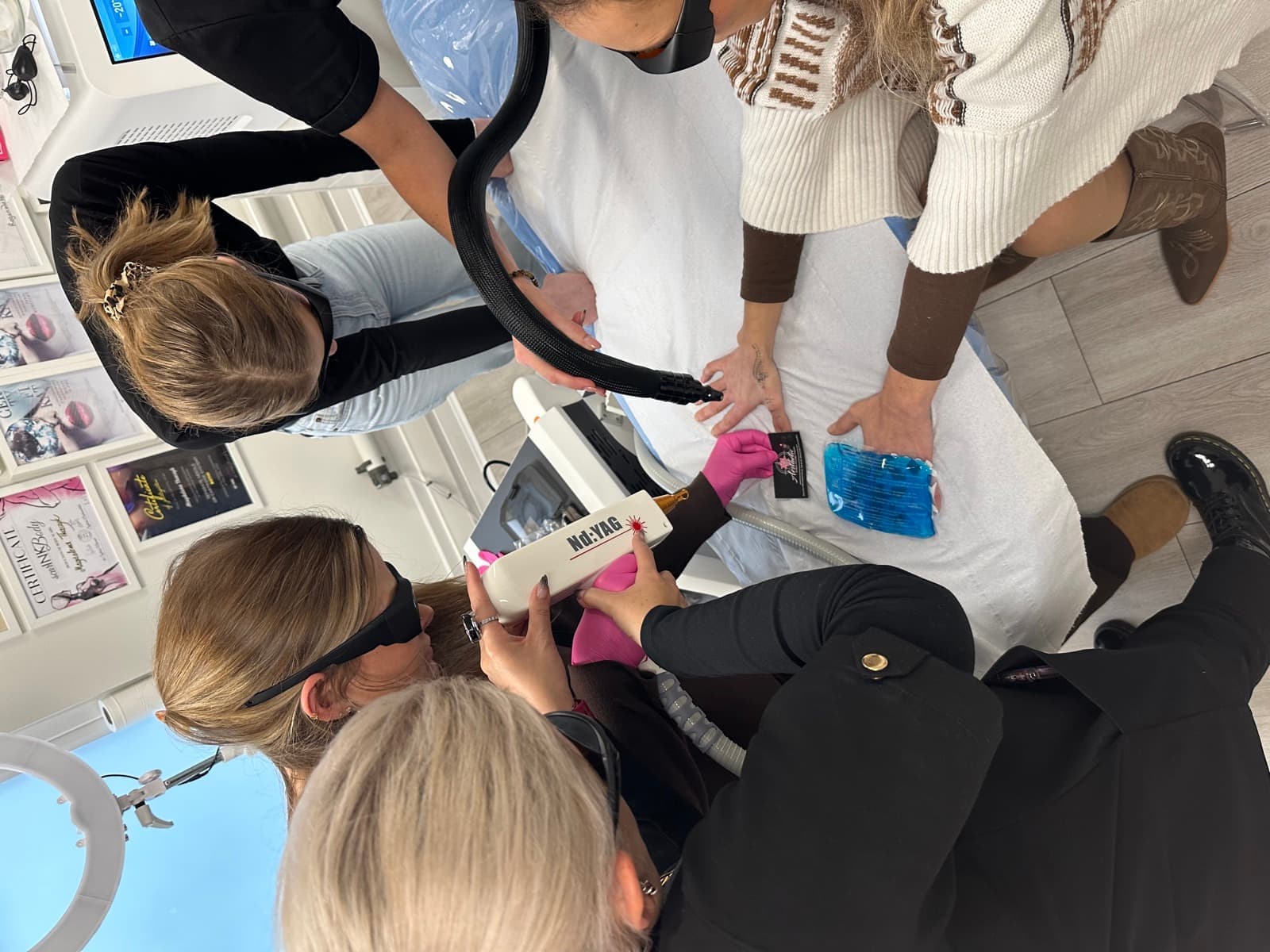
Whatever the technology, two things matter most: training and the chance to try the device before you buy. A laser in the hands of someone who understands how the beam acts on skin and pigment is safer than the best device operated by the chart. That is why at Gangsta Lasers training is part of buying a device, and you can test the laser live before you decide.
Frequently asked questions
Does a picosecond laser always remove a tattoo faster than a nanosecond one?
Not always. A shorter pulse changes how energy acts on the pigment, but the number of sessions also depends on the colour, depth and amount of ink, the condition of the skin, previous treatments and the operator’s experience. An honest forecast can only be given after a consultation.
Is a nanosecond laser enough for permanent make-up removal?
In many clinics, yes — Nd:YAG Q-Switch nanosecond lasers are widely used for permanent make-up. The choice does, however, depend on the pigments you work with and on what other treatments you want to perform with the same device.
Which wavelengths are needed to remove coloured tattoos?
1064 nm is used for dark colours and 532 nm for shades of red. The remaining colours require other wavelengths, so devices with several wavelengths are chosen for work with coloured tattoos. Selecting the parameters for a specific pigment is the job of a trained operator.
Can I test the laser before buying?
Yes. Gangsta Lasers offers live testing of its devices, and training in safe work is part of the purchase. Contact us to arrange a demonstration.