
Safety · Laser technology
Skin cooling during laser treatments — why it matters and how to do it
Skin cooling is not a comfort extra — it is part of a safe laser treatment. We explain how the cooling methods differ, when to use them and which mistakes to avoid.
By Gangsta Lasers4 min read
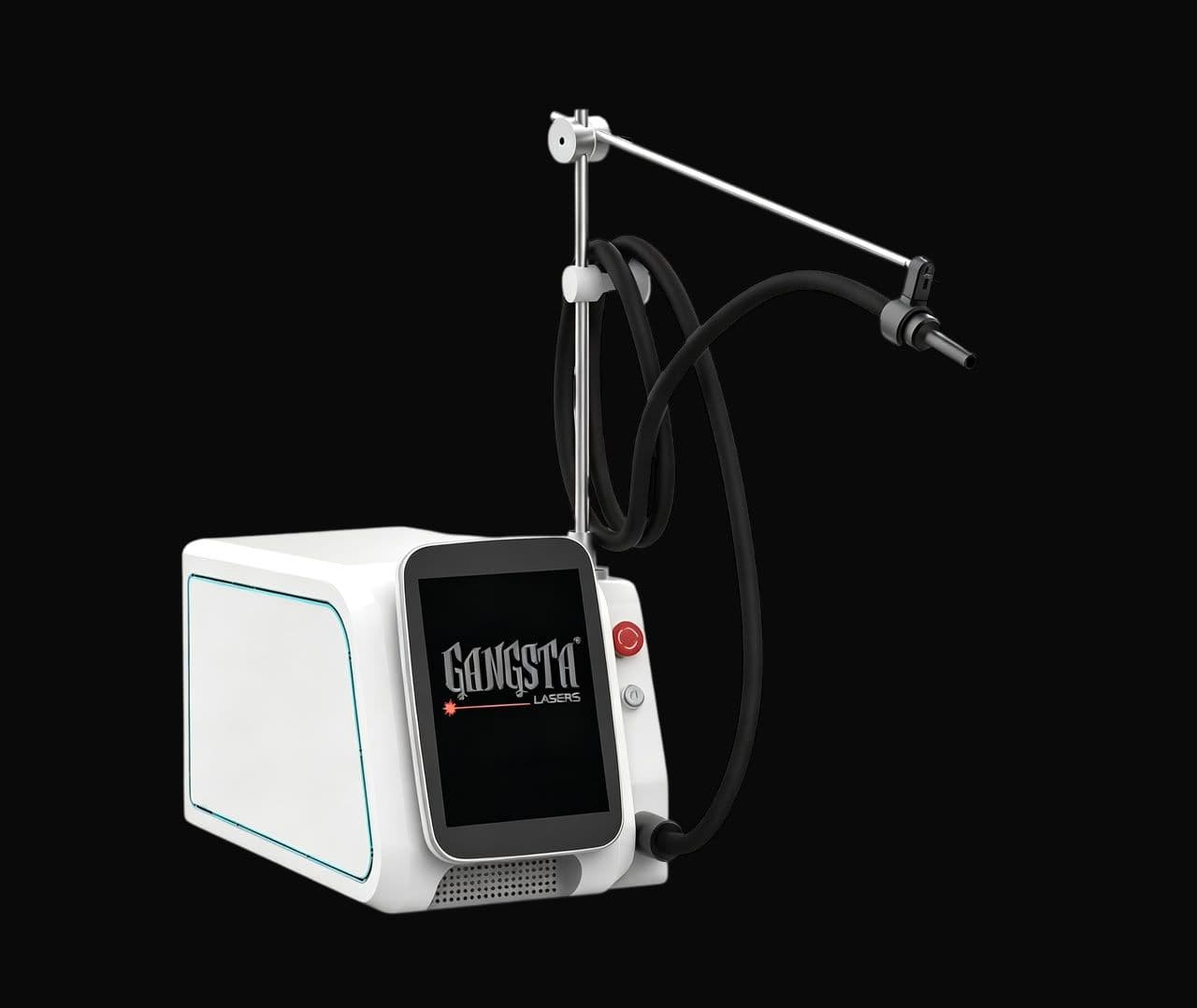
During a laser treatment, some of the energy turns into heat — even when the target is the pigment rather than the skin itself. Cooling helps draw that heat away from the skin surface and reduces the client’s discomfort. In many clinics it is a standard part of the protocol for tattoo and permanent make-up removal, laser hair removal and vascular treatments.
Why cool the skin
- Client comfort — cooling the treatment area acts as a temporary anaesthetic, which matters especially during longer treatments and in sensitive areas.
- Protecting the epidermis — drawing heat away from the skin surface limits the thermal load on tissue that is not the target of the treatment.
- Milder post-treatment reactions — cooling is used to reduce redness and swelling.
- Smoother work — a client who tolerates the treatment better asks for breaks less often, and the operator can work calmly and precisely.
Skin cooling versus device cooling
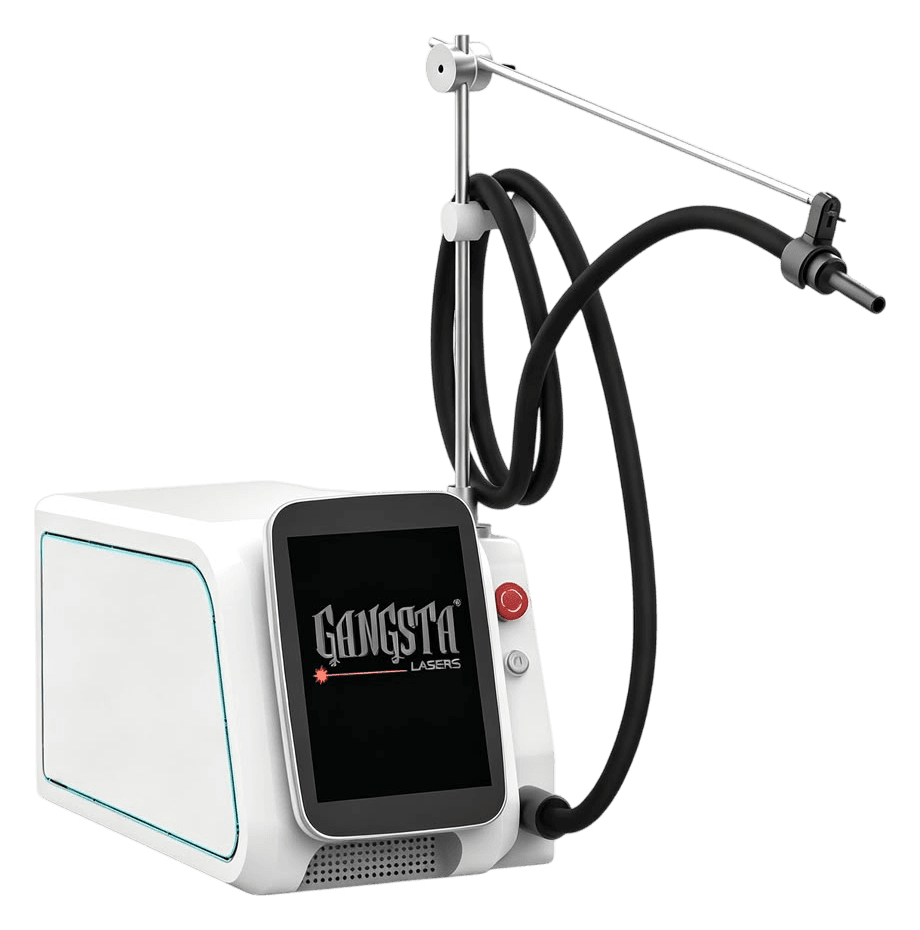
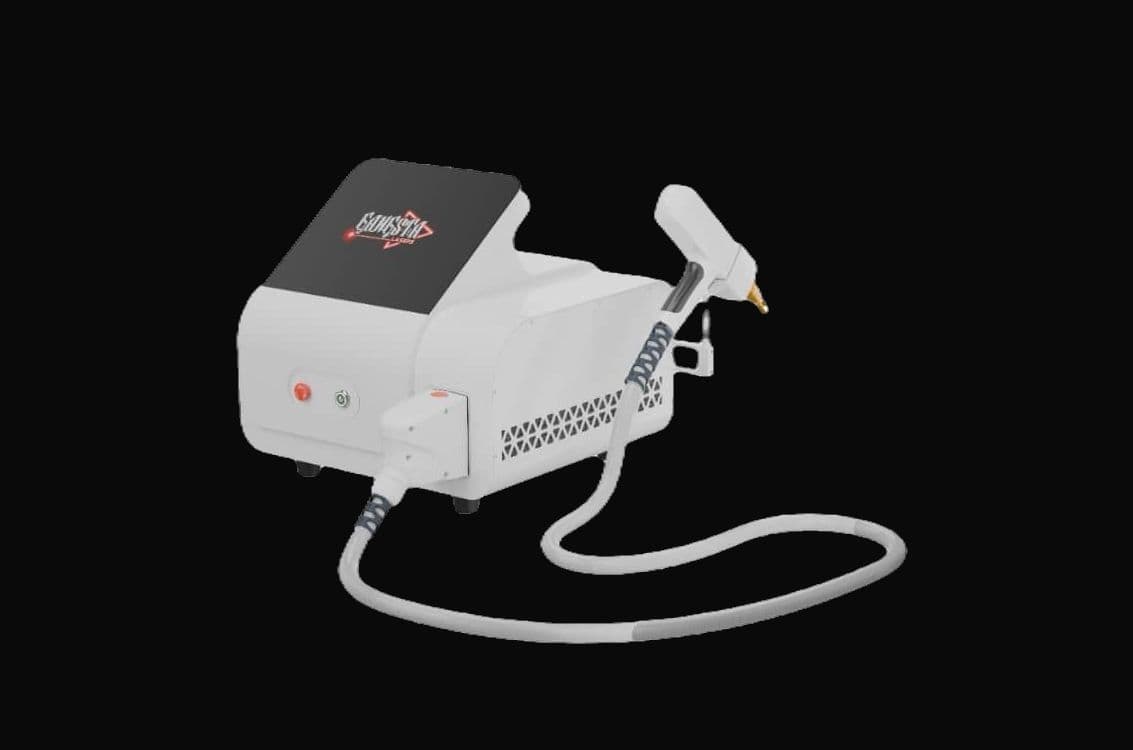
These are two different things that are easy to confuse in equipment descriptions. The cooling system inside the laser — for example multi-stage water-air cooling — protects the crystal, the lamp and the electronics so the device runs at stable parameters for the whole session. It does not cool the client’s skin. Skin cooling is provided by a separate system: built into the handpiece (such as contact cooling) or external, for example an air cooler.
Skin cooling methods
- Cold air cooling — a stream of strongly chilled air directed at the treatment area before, during and after the treatment. It does not require contact with the skin, so it does not get in the way of moving the handpiece.
- Contact cooling — a chilled tip or window of the handpiece touches the skin while you work. Used, for example, in diode lasers for hair removal and vascular treatments.
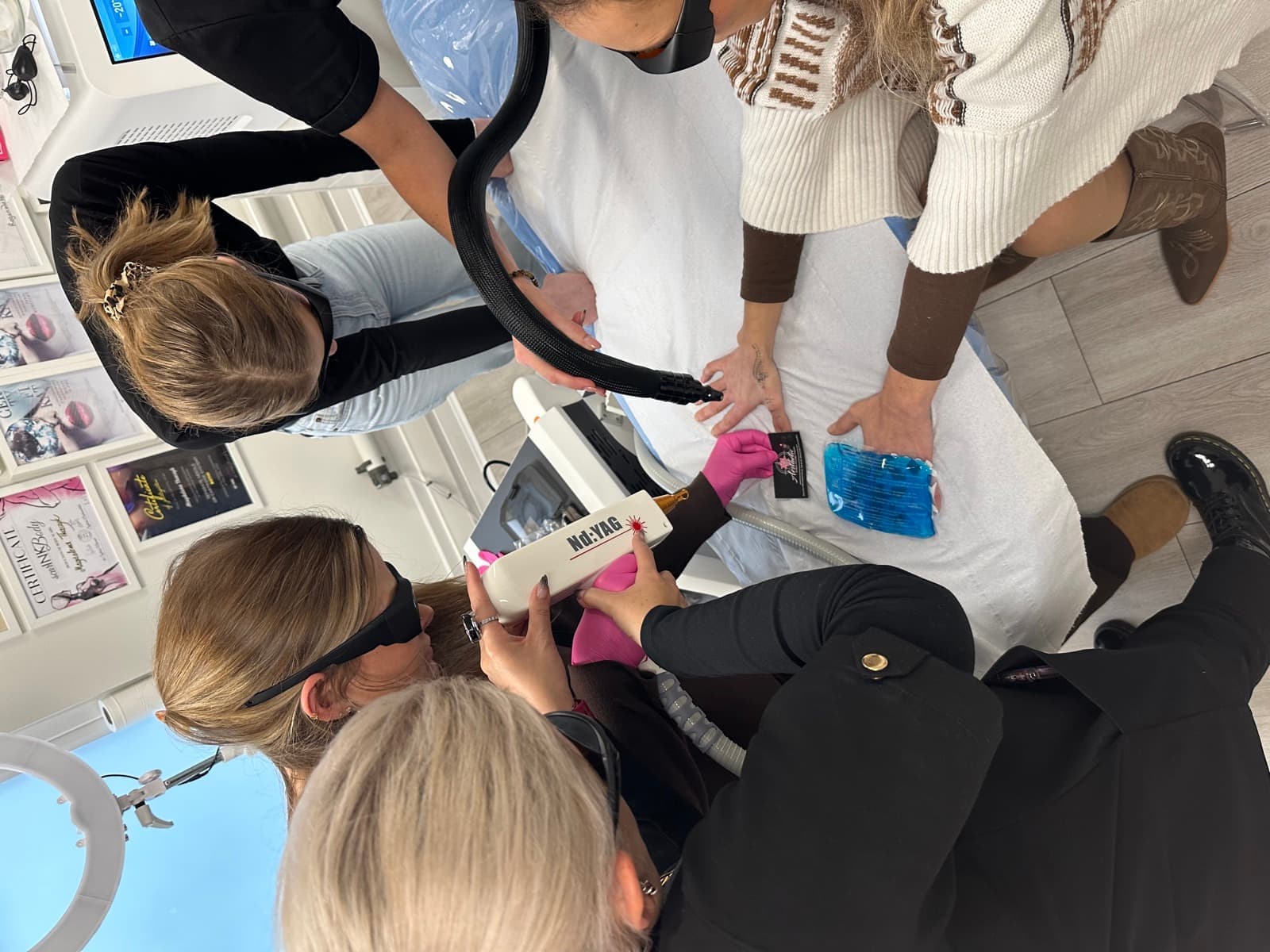
- Cold packs and cooling gels — the simplest method, usually applied before and after the treatment; during the treatment itself it is harder to keep the temperature constant.
The choice of method depends on the type of treatment and the device. In pigment removal with nano- and picosecond lasers, air cooling is often used because it cools the skin without covering the area the beam is aimed at.
Cooling in different treatments
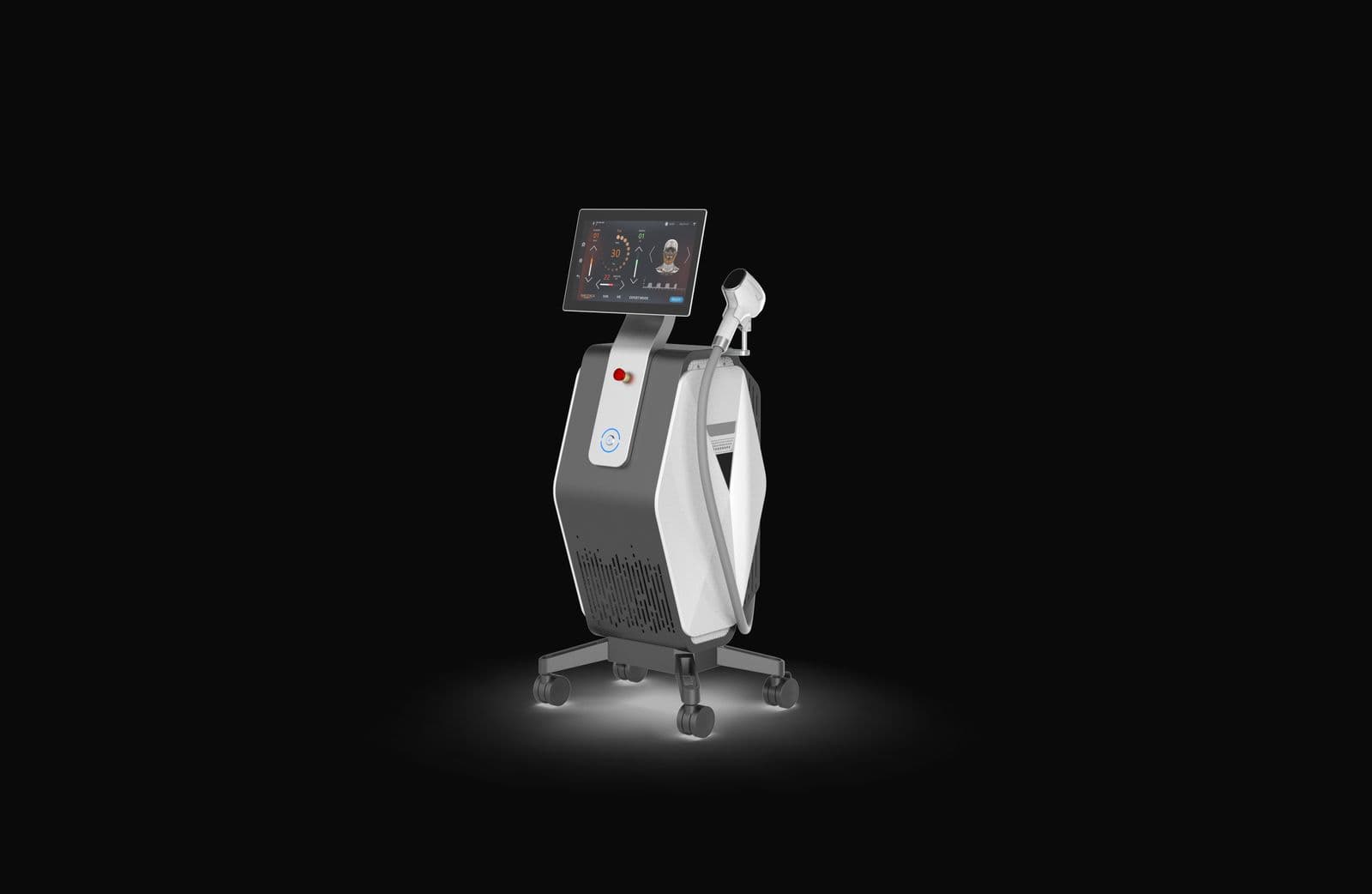
The role of cooling changes depending on what the beam does. In tattoo and permanent make-up removal the energy targets the pigment, and cooling mainly reduces discomfort and limits heating of the skin surface. In laser hair removal the beam is meant to heat the hair follicle while the epidermis should stay as cool as possible — hence cooling built into the handpiece, such as the TEC system in the Gangsta SHR diode laser. In vascular treatments with a diode laser, contact cooling helps limit discomfort while working on thread veins.
With fractional lasers, IPL or fractional RF microneedling, air cooling is often used before the treatment, during it and immediately afterwards. In each case the principle is the same: cooling supports the treatment but does not replace properly selected parameters and observation of the skin. That is why it is worth defining the cooling method for each treatment separately and writing it into the clinic’s protocol, rather than leaving it to each person’s habits.
The most common mistakes
- Treating cooling as a way to “turn up” the parameters. Cooling reduces discomfort, but it does not change how much energy the skin receives. Parameters are chosen for the skin and the pigment, not to how much the client can tolerate.
- Cooling one spot too intensely or for too long. Excessive cooling can also irritate the skin; settings are chosen according to the device’s instructions and the protocol from the training.
- Losing feedback. A client whose skin is numbed by cold may not signal that something is wrong — which makes the operator’s observation of the skin reaction all the more important.
- Skipping cooling after the treatment. Cooling right after the treatment is part of the protocol too, not just what happens during it.
What to look for when choosing a skin cooler
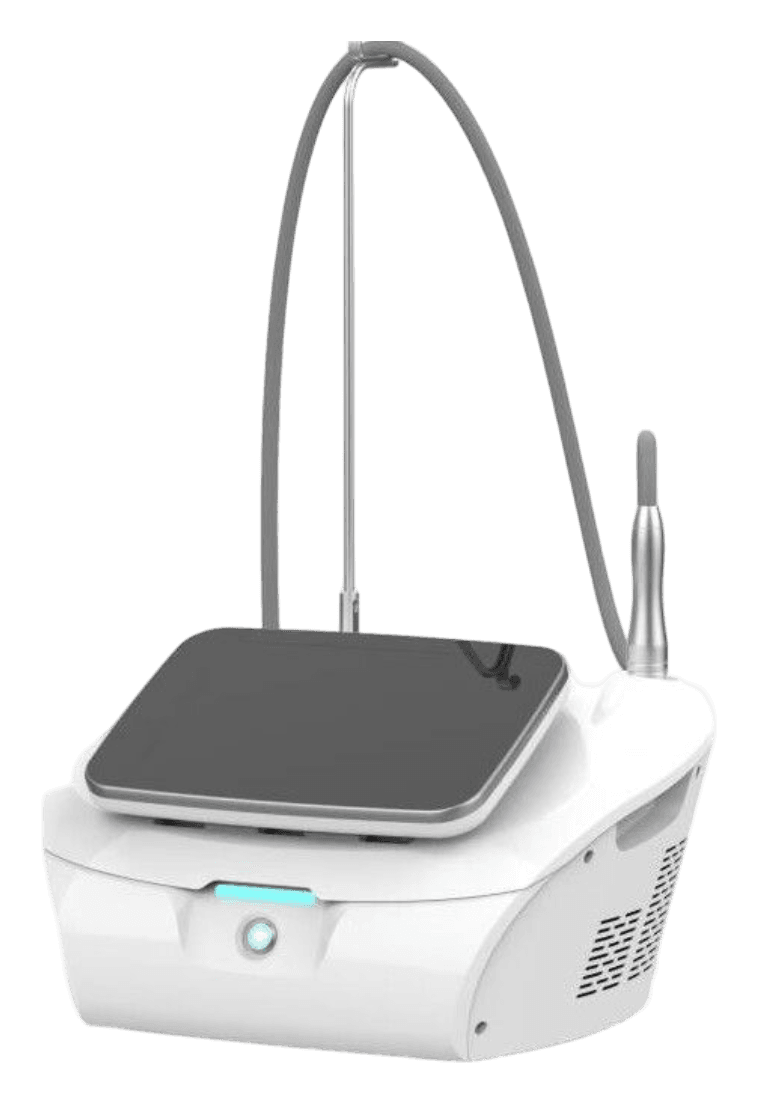
A skin cooler should be easy to use and should not get in the way of your work. It is worth checking the airflow adjustment, the operating time, the noise level, how the nozzle is mounted and whether the device warns of problems. For example, the COOLPLUS cooler works with laser systems, IPL and fractional RF microneedling; it has an adjustable fan speed from 0 to 0.5 m³/min in nine steps, an operating time adjustable from 60 to 120 minutes, noise below 60 dB and an alarm system that reports any problems.
Cooling is one element of a safe treatment — alongside the consultation, correct parameter selection, eye protection and aftercare instructions. Like each of them, it takes training, not just buying the equipment.
Frequently asked questions
Why is the skin cooled during a laser treatment?
Cooling draws heat away from the skin surface, reduces the client’s discomfort and is used to limit redness and swelling after the treatment. It does not replace correct parameter selection.
Does the cooling system inside the laser also cool the skin?
No. The internal cooling system, for example water-air, protects device components such as the crystal and the lamp. The skin is cooled by a separate system — built into the handpiece or external, such as an air cooler.
When should cooling be used — before, during or after the treatment?
In many protocols, at all three stages. The specific way it is used depends on the type of treatment, the device and the protocol taught in the training.
Can the skin be overcooled?
Yes, cooling one spot too intensely or for too long can irritate the skin. Settings are chosen according to the device’s instructions, and the operator observes the skin’s reaction throughout the treatment.