Permanent make-up removal · Safety
Laser removal of eyebrow permanent make-up — procedure, preparation and aftercare
Brows are the permanent make-up that most often ends up being removed or corrected. We describe what the consultation, the treatment itself and the aftercare look like in a professional clinic — and where the typical pitfalls lie.
By Gangsta Lasers4 min read
Eyebrow permanent make-up is one of the most frequently performed treatments in the industry — and one of the most frequently corrected. Clients come in with pigment that has changed colour over the years, a shape they no longer like, or work that was done badly. A laser is one of the methods for removing such pigment. This article is written for professionals — PMU artists, beauty salons and aesthetic medicine clinics — who want to put their knowledge of the procedure in order.
Consultation: the most important part of the treatment
With brows, the history of the pigment often matters more than what is visible to the naked eye. The make-up may have been done several times, with different pigments, and earlier removal attempts with a remover or other methods leave further layers of substances in the skin. Each of these layers can react differently to the laser beam.
- When and how many times the make-up was done, which pigments were used (if the client knows) and whether there were any corrections.
- Whether the pigment was removed before — with a laser, a remover or other methods — and with what result.
- The current condition of the skin around the brows: scars, irritation, inflammation, a fresh tan.
- Medications and supplements the client takes, especially photosensitising ones, and any other circumstances that may be a contraindication.
- The client’s expectations: complete removal or lightening for new make-up.
At this stage it is worth taking photos in consistent lighting and being honest with the client that removal is done as a series and that the number of sessions depends on many factors. Whether and when to perform the treatment is decided by the specialist after the consultation.
Test and the risk of pigment colour change
Some pigments used in permanent make-up — especially light, flesh-toned or corrective ones — can change colour under the beam, for example by darkening. That is why many protocols include a test on a small area, and an assessment of the reaction, before the full treatment. Those few minutes protect against the client leaving with brows in a different colour from the one she expected.
The treatment
- Preparation: make-up removal, cleansing and disinfection of the brow area, photos before the treatment.
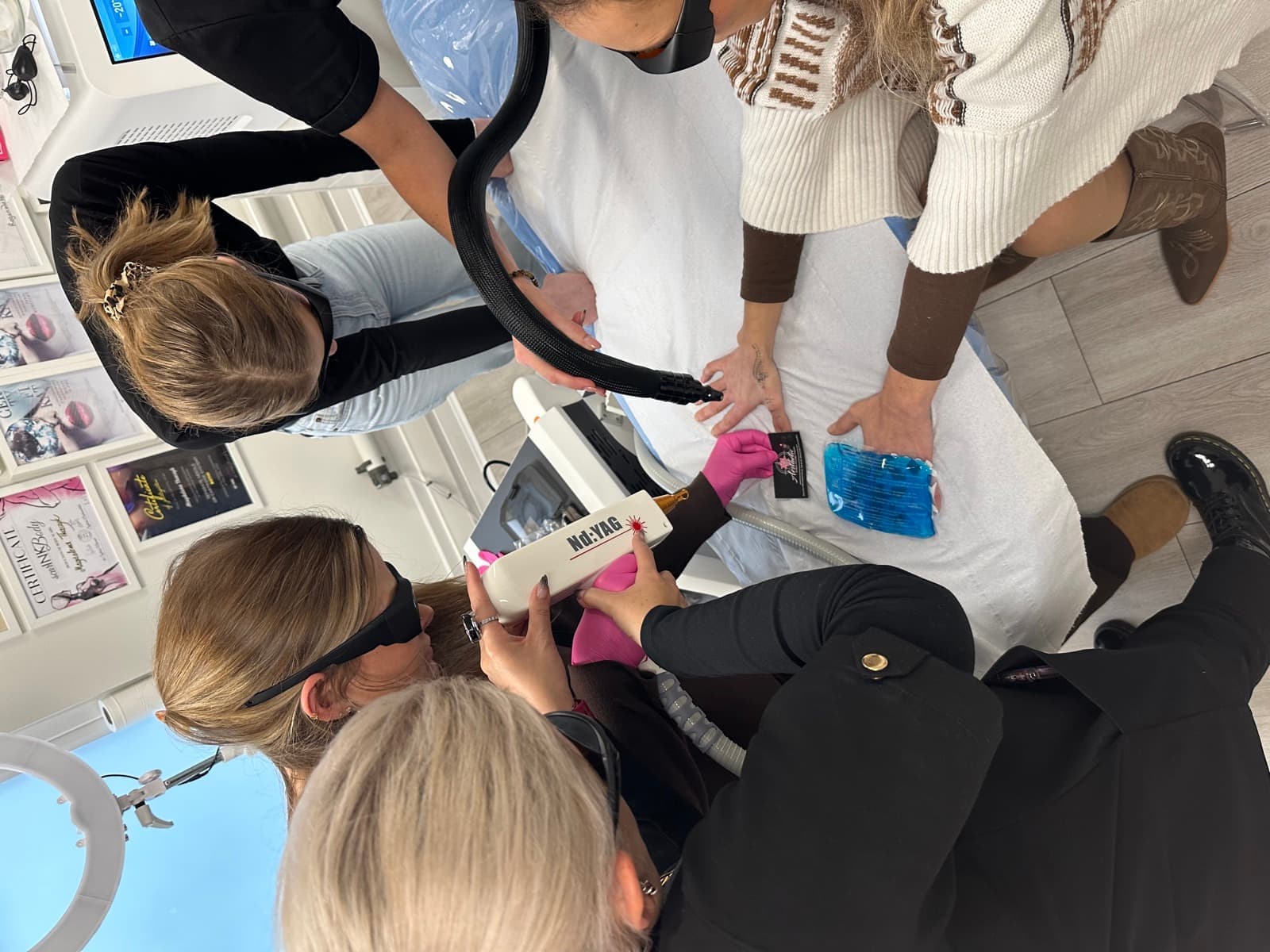
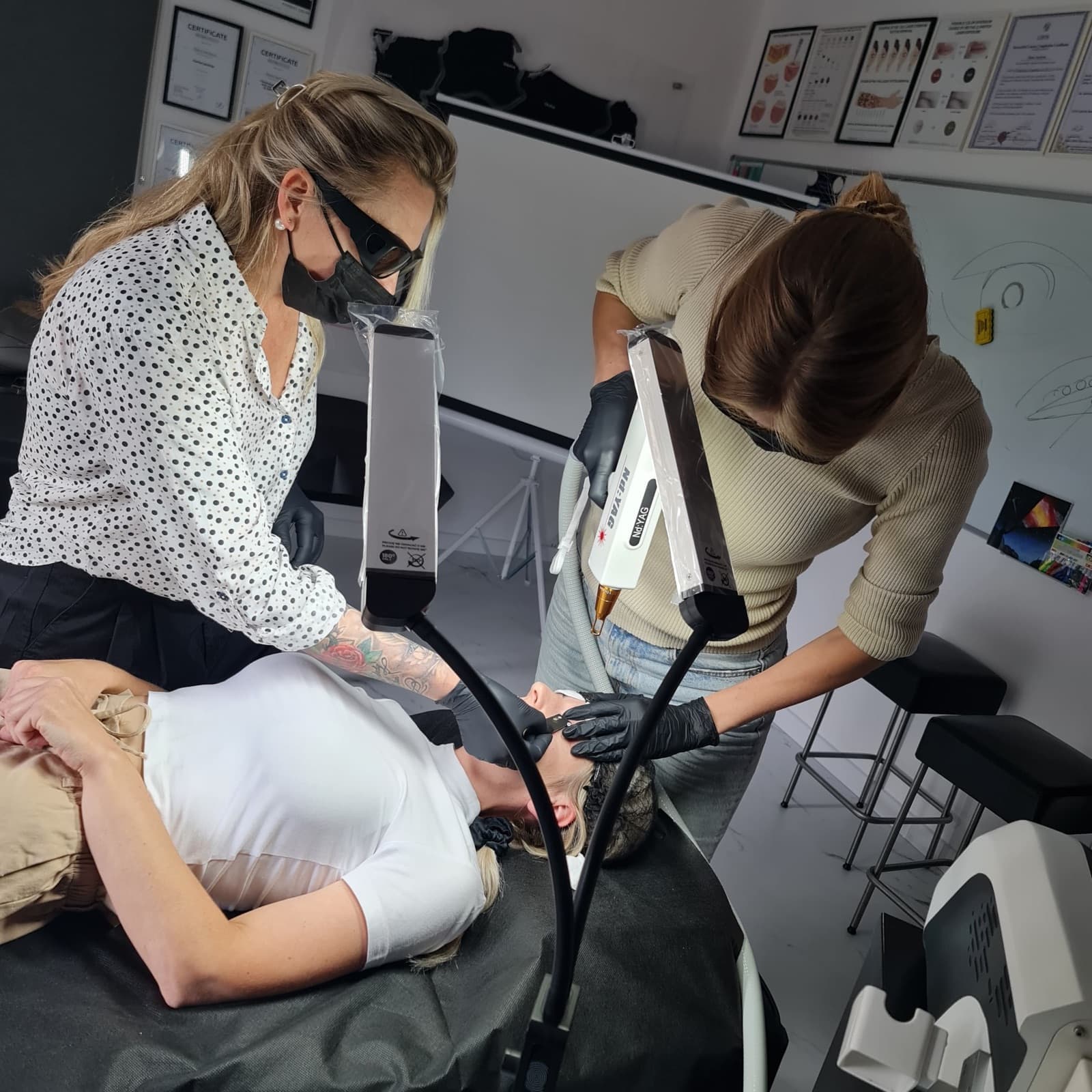
- Eye protection: the brow area lies right next to the eye, so eye protection for both the client and the person performing the treatment is mandatory. The type of eyewear should match the device’s wavelength.
- Parameter selection: wavelength, energy and spot size depend on the colour and depth of the pigment and on the skin’s reaction in the test.
- Treatment: the beam is passed over the pigmented area; immediate whitening (frosting) and slight swelling are a typical skin reaction, but it is the operator who assesses how pronounced they are.
- Cooling and protecting the skin after the treatment, in line with the clinic’s protocol.
Remember that the beam also acts on the brow hairs. This needs to be discussed with the client before the treatment and should be part of any training for working in this area.
Aftercare and intervals between sessions
Aftercare instructions are given to the client by the person performing the treatment, preferably in writing. They usually include:
- keeping the area clean and using only the recommended products,
- not picking scabs and not damaging the healing skin mechanically,
- avoiding the sauna, swimming pool and intense exercise for the period indicated by the specialist,
- sun protection and no tanning until fully healed,
- contacting the clinic if a worrying reaction appears.
The next session is planned once the skin has healed and the result has been assessed, usually a few weeks later. The body clears the shattered micro-fragments of ink gradually, so the result is judged over time rather than straight after the treatment.
Removal or lightening for new make-up
Not every client wants her make-up removed completely. Some only need the pigment lightened so that a PMU artist can create a new shape or change the colour. In that case the goal of the series is different, and the series is often shorter. Agree on this at the consultation and note it on the client card, because it determines when the series is complete.
If new permanent make-up is planned after the laser, the specialist decides when it can be done, after assessing how the skin has healed. Good practice is for the person removing the pigment to work together with the PMU artist who will do the new make-up — both then see the same skin condition and the same pace of healing, rather than relying on the client’s account.
Which laser for permanent make-up removal
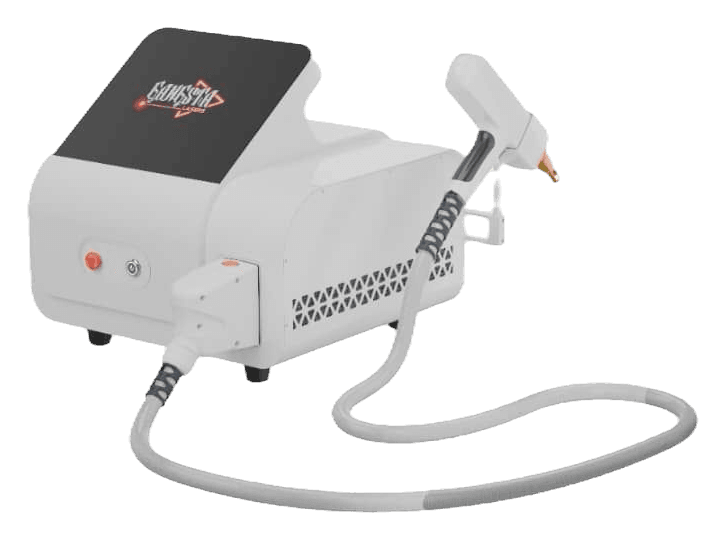
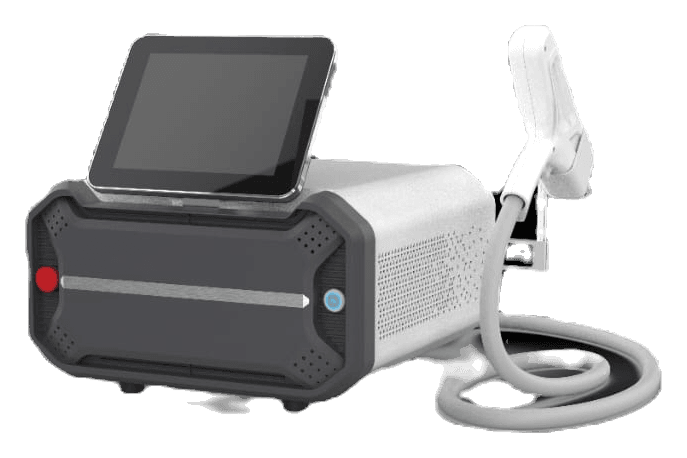
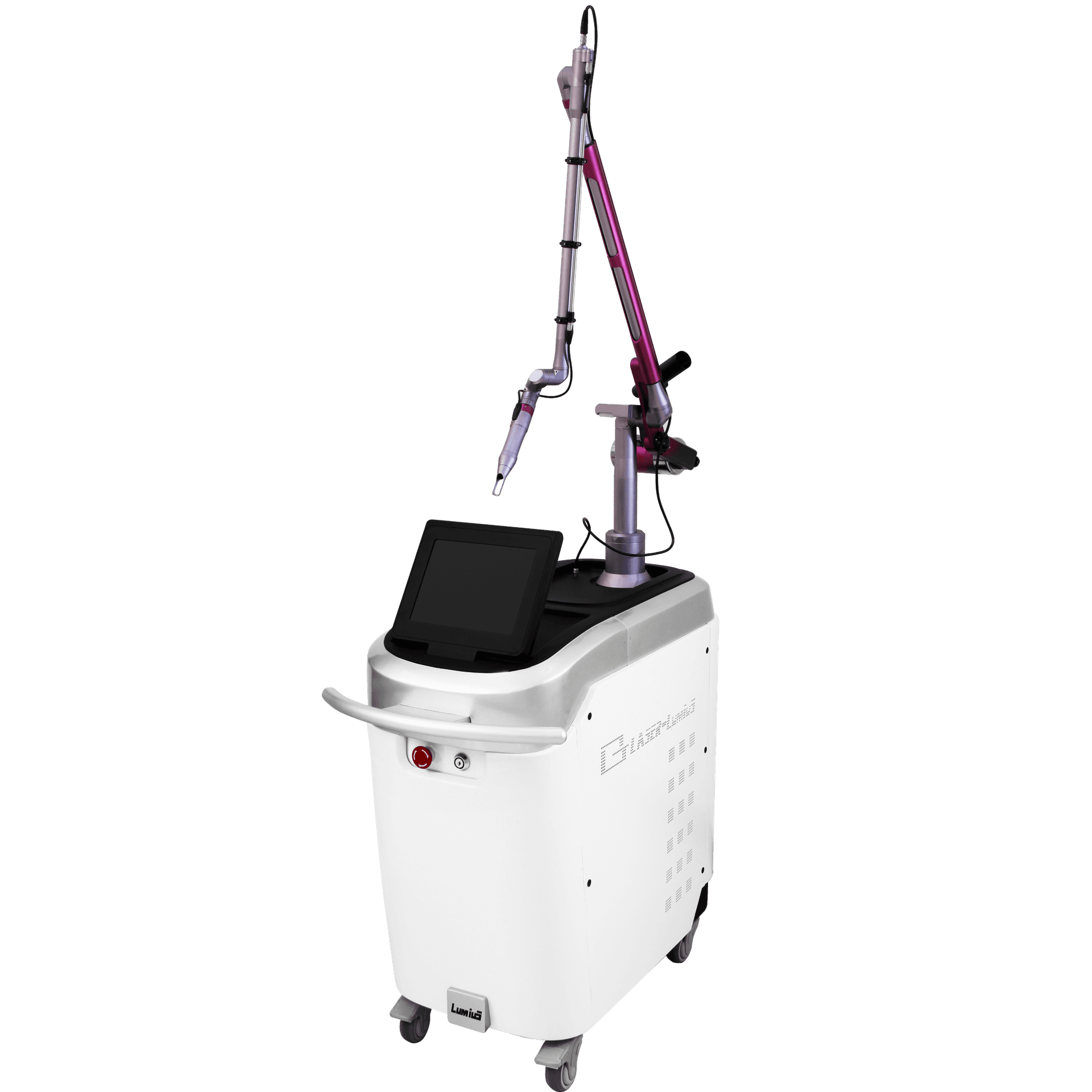
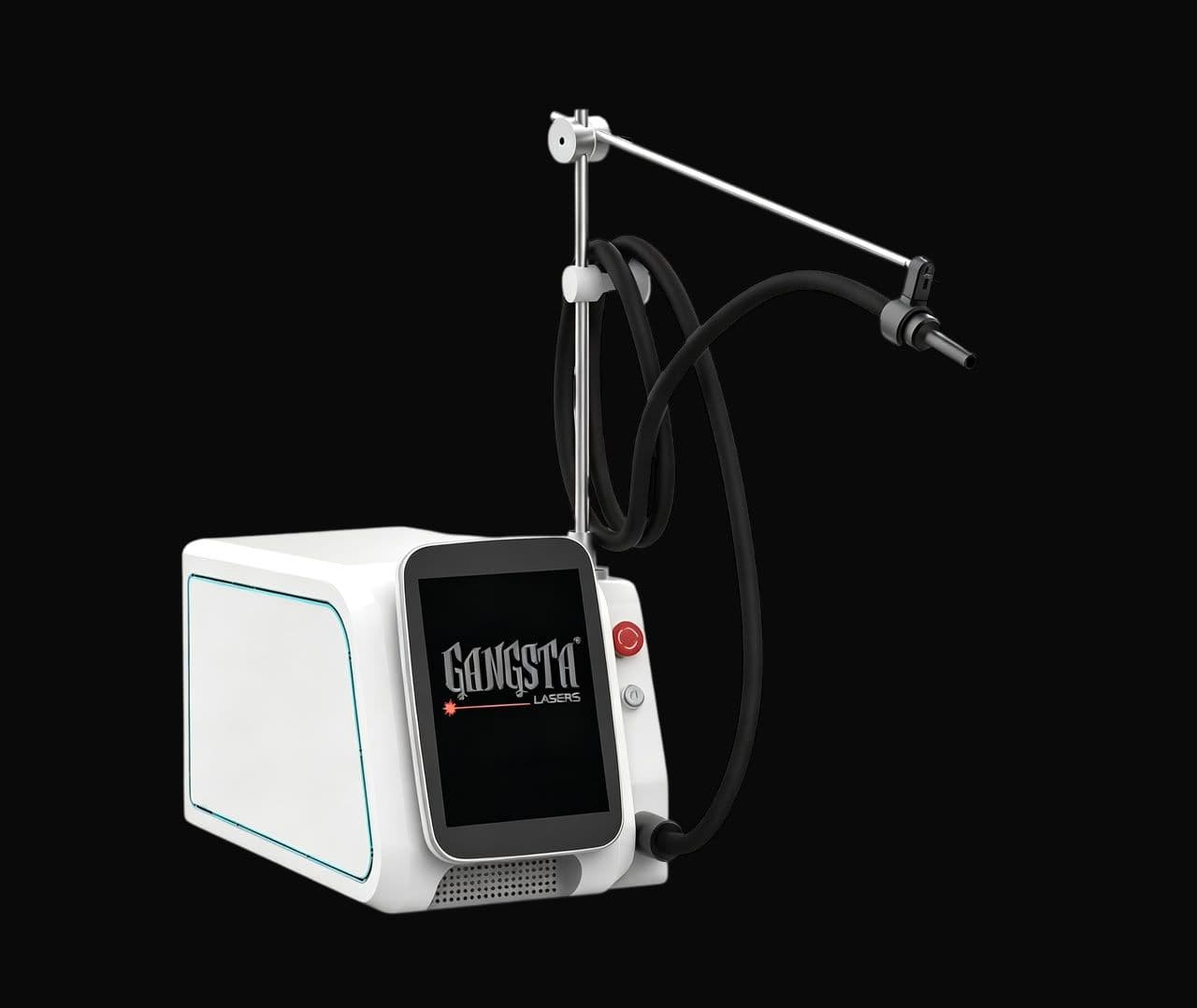
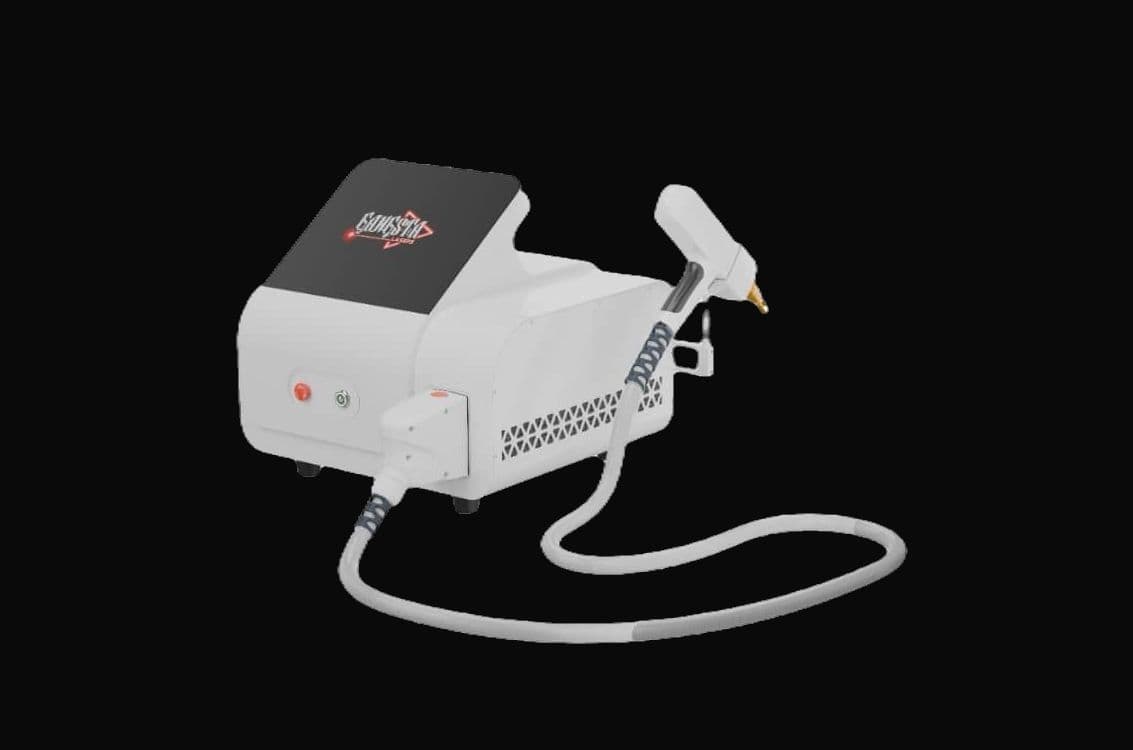
Permanent make-up is most often removed with Nd:YAG lasers — nanosecond (Q-Switch) or picosecond — with 1064 nm for dark colours and 532 nm for shades of red. Many PMU artists start with a compact nanosecond laser such as Gangsta Nano Basic, while clinics that also work with tattoos and coloured pigments choose more powerful dual-crystal devices or picosecond technology. Whatever the equipment, training is key: working next to the eye and with layered pigment is not the place for learning by trial and error.
Frequently asked questions
How many sessions does it take to remove eyebrow permanent make-up with a laser?
It cannot honestly be determined before a consultation. The number of sessions depends on the type and amount of pigment, its depth, earlier corrections and removal attempts, and the skin’s reaction. A specialist can give an approximate range after assessing the pigment and the first treatments.
Can brow pigment darken after laser treatment?
Some pigments, especially light, flesh-toned or corrective ones, can change colour under the beam. That is why many clinics carry out a test on a small area before the full treatment and assess the reaction.
How long should I wait between treatments?
The next session is planned after the skin has fully healed and the result has been assessed, usually a few weeks apart. The exact date is set by the person performing the treatment.
Does the laser damage brow hairs?
The laser beam can also act on the hairs in the treatment area. This needs to be discussed with the client before the treatment and should be part of any training for working around the eye.