Laser technology · Clinic and business · Permanent make-up removal
How to choose a laser for tattoo and permanent make-up removal — questions to ask before you buy
Buying a laser is a decision you live with for years: it affects your clients’ safety, what your clinic can offer and its finances. We have collected the questions worth asking yourself and your supplier before you sign an order.
By Gangsta Lasers4 min read
A pigment removal laser is usually the biggest single purchase a clinic makes. Comparing devices by photos, advertising promises or price alone leads to two typical disappointments: equipment that cannot cope with the pigments that actually end up in your treatment chair, or a device that leaves you without support after the sale. Below are questions that help you avoid both.
Start with yourself: what you want to remove and for whom
Before you compare devices, describe your own clinic. The best laser for a tattoo studio lightening work for cover-ups does not have to be the best one for a PMU artist correcting brows, or for an aesthetic medicine clinic that also works with pigmentation.
- Which pigments come to you most often — permanent make-up of the brows and lips, dark tattoos, coloured tattoos?
- Do you want to offer only pigment removal, or also pigmentation treatments, carbon peels or skin renewal?
- How many treatments a week do you realistically plan in the first year, and how much space do you have in the clinic?
Questions about the technology
- Is it a nanosecond (Q-Switch) or a picosecond laser? The difference in pulse duration changes how energy acts on the pigment and on the surrounding skin.
- Which wavelengths does the device generate? The 1064 nm wavelength is used for dark colours, 532 nm for shades of red. Other colours need additional wavelengths.
- How is the optical system built and what protects the crystal? Ask about the Nd:YAG crystal, the lamp, the temperature and liquid-flow sensors, and the device’s cooling system.
- What does the energy distribution in the spot look like? Evenly distributed fluence means a more predictable effect on the skin than a spot with a “hot” centre.
Ask the supplier for the technical parameters in writing and for an explanation of where they come from. Figures in advertising material are sometimes stated in different ways, so comparing devices only makes sense when you know exactly what each figure means.
Questions about training, warranty and service
- Is training included in the price of the device, how long does it last and does it include work on models? Training should teach not only how to use the panel, but also how the beam acts on skin and pigment.
- Who runs the training and what experience do they have in pigment removal? Ask about the trainer’s practice, not only their certificates.
- How long is the warranty and can it be extended? What exactly does it cover?
- Where is the service centre, how long do repairs take and can you count on support during that time? A laser out of action in the middle of a treatment series is your clients’ problem, not only yours.
- Can you call after the training with a question about a specific case?
At Gangsta Lasers, training in safe techniques for removing permanent make-up and tattoos is part of buying a laser, and the devices come with a two-year warranty with the option to buy an extension for a third year. The scope of training and warranty differs between devices, so it is always worth checking it for the specific model.
Questions about finances
- What is the net price and what exactly does it include — training, accessories, lenses, delivery, installation?
- Can the device be financed through leasing, and who will help compare the offers?
- How many treatments per series and how many series per month do you need for the device to pay for itself? Calculate it on cautious assumptions, not on the best-case scenario.
The most common mistakes when buying
- Choosing on price alone — a cheaper device without training and service in Poland can turn out to be the most expensive over its whole working life.
- Comparing parameters without knowing what they mean and how they were stated in the advertising material.
- Buying a laser “just in case” for treatments the clinic does not plan to perform, instead of for the pigments that actually end up in the chair.
- Assuming that experience in permanent make-up or tattooing replaces laser training.
- Having no plan for the first months — who performs the treatments, how you will attract clients and how you will price a series.
Each of these mistakes can be avoided with one conversation before buying. A good supplier will ask you about your clinic, your clients and your plans before proposing a specific device.
See the device live
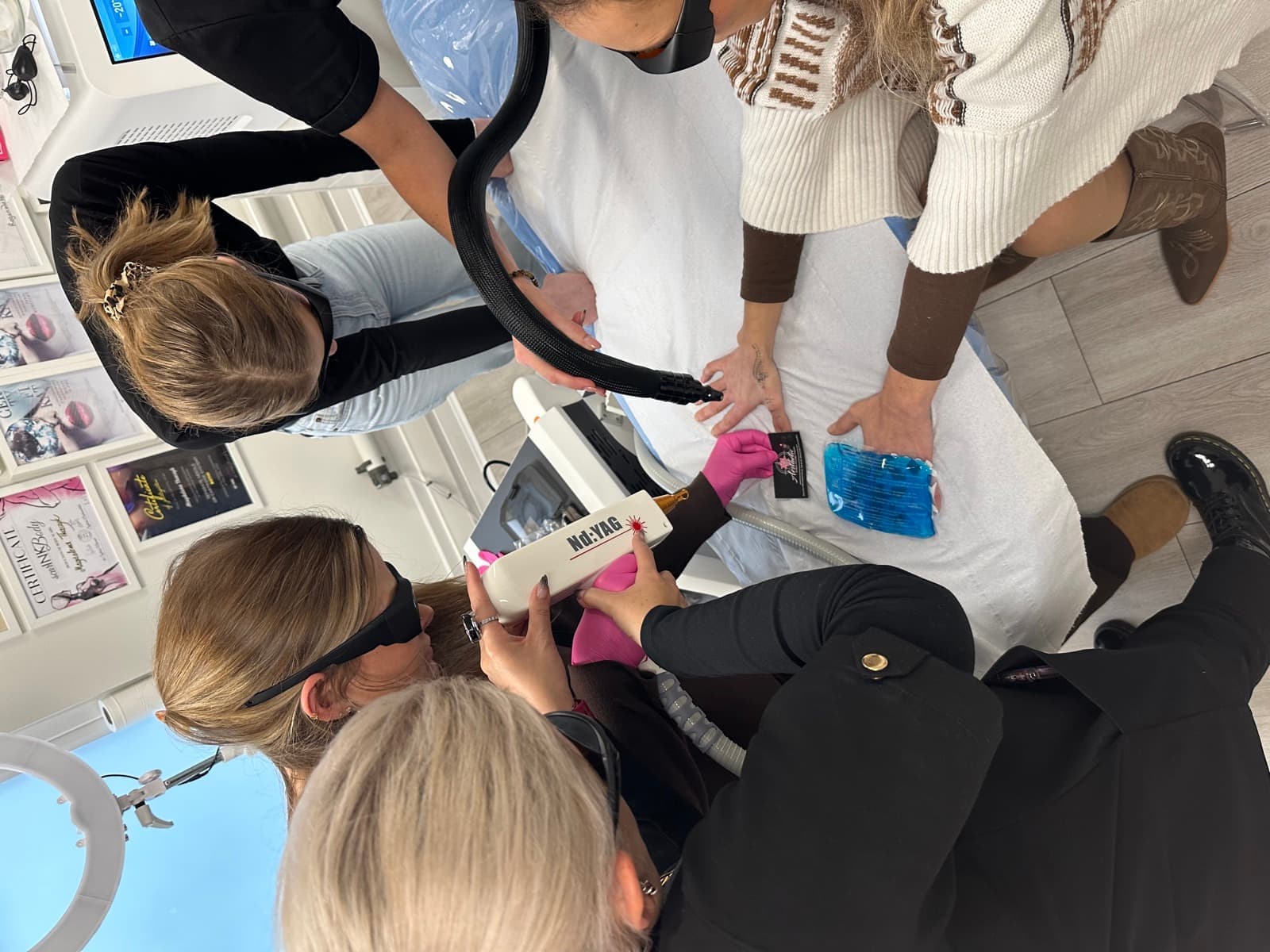
You will learn the most about a laser when you see it at work: what the skin reaction looks like, how intuitive the panel is, how the handpiece feels in your hand after an hour of work. Ask for a live demonstration, ideally on pigment similar to what you work with. A supplier who is confident in their equipment should have no problem with that.
Choosing a laser also means choosing a partner for years to come. If you would like to talk about which device suits your clinic, call or write to us — we will match it to the pigments you actually work with, not to the most expensive item in the price list.
Frequently asked questions
Which laser should I start with for permanent make-up removal?
Many PMU artists start with a compact nanosecond Nd:YAG Q-Switch laser, which works well on permanent make-up and can also perform carbon peels. The final choice depends on the pigments you work with and on your plans for developing your offer.
Do I need training if I already have experience in permanent make-up?
Yes. Applying permanent make-up and removing it with a laser are different skills. Laser training covers how the beam acts on skin and pigment, parameter selection, assessing contraindications and aftercare.
What should I look for in a laser warranty?
The length of the warranty, whether it can be extended, what exactly it covers, where servicing takes place and how long a repair takes. It is also worth asking whether the supplier provides expert support after the training.
Can a tattoo removal laser be leased?
Yes, clinic devices are often financed through leasing. It is worth tailoring the terms to your business with the help of a leasing adviser who will compare offers from several institutions, and consulting an accountant about the tax implications.